27 September 2026 | Architecture and real estate
In Dubai, a map can become out of date before a building does. Over the past quarter-century, the city has added islands to its shoreline, placed a new downtown south of its historic centre, and carried the idea of urban life towards an exhibition district in the desert. Its most consequential construction project has been the city itself.
The familiar story is told in superlatives: the tallest tower, the most extravagant hotel, the island visible from space. A more revealing history asks what those structures made possible. Hotels created destinations. Financial buildings gave economic ambition a physical address. Malls and cultural venues helped turn property developments into places people used throughout the day.
Dubai’s transformation was neither instantaneous nor inevitable. It grew from an existing trading city, used changes in ownership policy to attract capital, survived a severe debt crisis and later absorbed a pandemic disruption. The result is a metropolis with several centres, each built around a different promise.
Six moments in a changing city
This article takes six snapshots at five-year intervals: 2001, 2006, 2011, 2016, 2021 and 2026. Each is illustrated with a photograph of a landmark discussed in that period. The first snapshot shows landmarks already standing at the beginning of the period. Later snapshots feature buildings delivered in the preceding five years; 2026 is current to 27 September.
The photographs show selected landmarks, not the full built-up area. Some were taken after the milestone year; they document the place, not its appearance on the precise opening date. Opening dates and construction completion dates are identified separately: a finished structure and an operating destination are not the same milestone.
The argument in one paragraph
The defining achievement was the combination of buildings, institutions and infrastructure. The defining vulnerability was the distance that sometimes opened between the speed of development and the depth of demand. The next phase will be judged by how well Dubai connects and sustains the places it has built, as much as by the height of its next tower.
2001 A trading city begins a new chapter
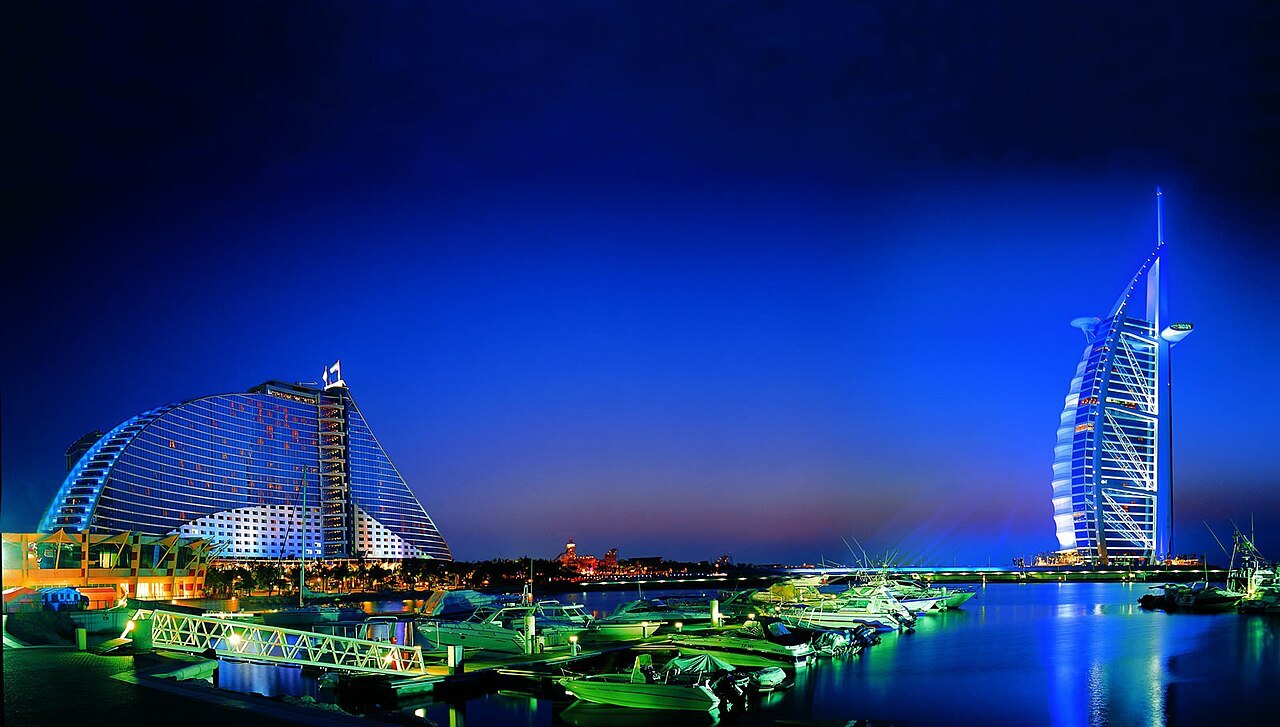
Dubai did not begin as an empty desert awaiting skyscrapers. The Creek supplied the city with a commercial centre long before the modern property boom. By 2001, the architecture of international ambition was already visible along the coast and Sheikh Zayed Road.
Burj Al Arab had opened in 1999. Emirates Towers followed in April 2000. They sit just outside this article’s 25-year construction window, but belong in its opening image: the sail-shaped hotel and paired triangular towers established two themes that would dominate the coming decades, destination tourism and international business. [1]
The strategic change was to make Dubai recognisable to people who had never visited it. A memorable building could travel through photographs and advertising, carrying the city’s name with it. Architecture became part of the infrastructure of demand.
Yet recognition alone would not have produced the next wave. The decisive enabling change came in 2002, when Dubai announced that designated developments could offer freehold property to non-GCC nationals. The US State Department’s contemporary investment reports record that opening. A local construction market could now reach a much larger pool of purchasers. [2]
2006 Real estate becomes an economic strategy
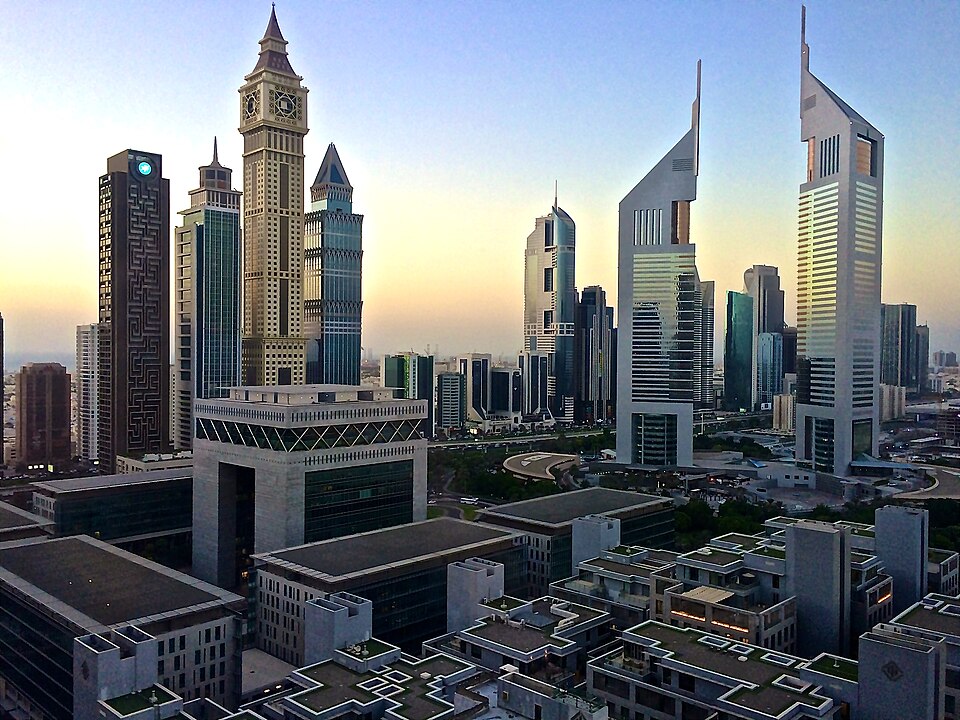
By 2006, Dubai was constructing more than individual addresses. It was packaging workplaces, shopping, leisure and housing into destinations that could attract different kinds of demand.
The Gate Building, completed in 2004, gave the Dubai International Financial Centre a commanding entrance and an immediately recognisable identity. Mall of the Emirates, opened in 2005, combined shopping with the unusual spectacle of indoor skiing. One offered a setting for business; the other made leisure a reason to travel across the city. [3, 4]
These buildings help explain the economics of master development. A district becomes easier to sell when prospective residents can imagine how they will work, shop and spend their time there. The anchor does not merely occupy land: it changes how surrounding land is perceived.
Property rights were part of that architecture. Dubai’s Regulation No. 3 of 2006 specified areas where non-UAE nationals could acquire freehold ownership and other long-term rights. It helped formalise the geography of foreign property ownership. [5] Meanwhile, Palm Jumeirah was visibly taking shape offshore. USGS satellite records document the island’s emergence alongside inland roads and development. [6]
The construction boom also had a human cost. Human Rights Watch’s 2006 investigation documented wage withholding and other abuses affecting migrant construction workers in the UAE. Those findings belong in the history of the skyline, alongside its engineering achievements. [7]
2011 The skyline rises through a financial reckoning
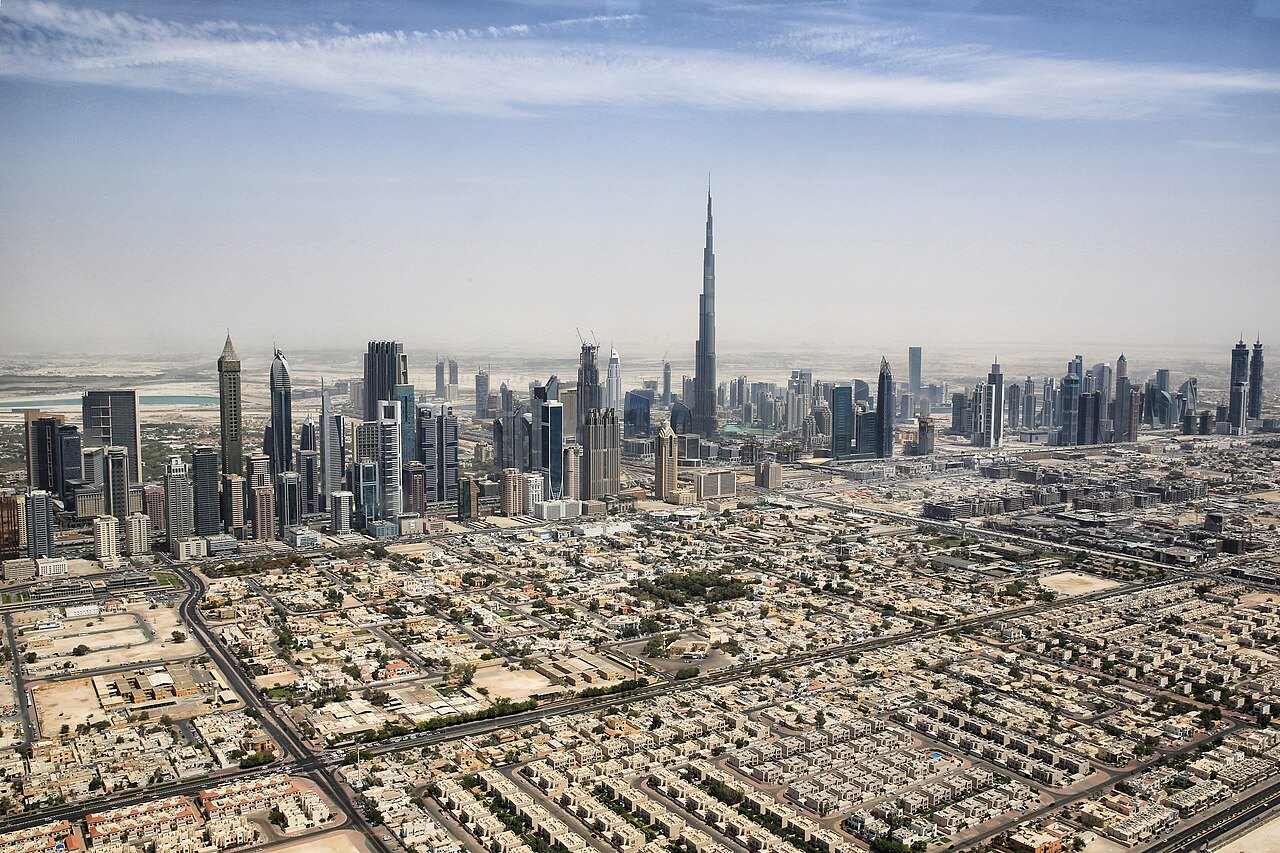
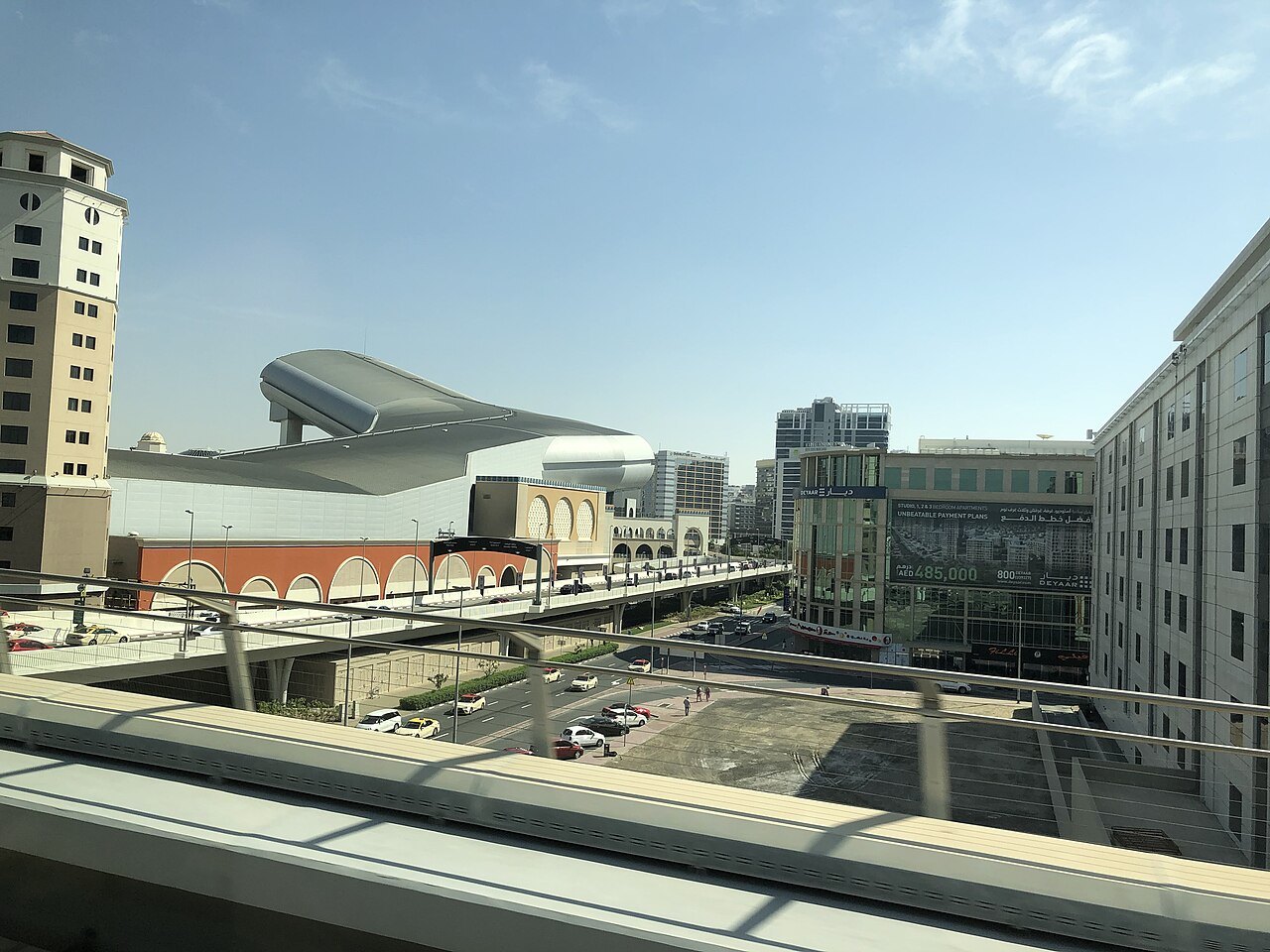
The most powerful image of Dubai’s boom arrived after the boom had broken. Burj Khalifa opened on 4 January 2010. At 828 metres, it made Downtown Dubai legible from far beyond the district itself. Dubai Mall had opened in November 2008, giving the new centre a major everyday destination beneath its extraordinary landmark. [8, 9]
Offshore, Atlantis, The Palm had welcomed guests in 2008. It turned a celebrated land-reclamation project into an operating hospitality destination. The island was no longer only a shape on a master plan; it had rooms, restaurants and visitors. [10]
The financial background was much less triumphant. Dubai World’s 2009 request for a debt payment delay exposed the risks of rapid, debt-funded expansion. Reuters reported the uncertainty surrounding obligations that lenders had associated with government-linked borrowers. The crisis showed that an ambitious master plan could not substitute for financing resilience. [11]
At the same time, the city acquired a less photogenic but deeply consequential asset. The Metro’s Red Line opened in 2009, followed by the Green Line in 2011. Rail began to connect a city whose major destinations had spread along a long corridor. [12]
The lesson of this interval is that buildings and markets follow different clocks. A tower may open during a downturn because it embodies commitments made years earlier. Its inauguration is evidence of delivery, not proof that the current market is healthy.
2016 Dubai begins to sell a fuller urban life
After proving that it could build at extraordinary scale, Dubai increasingly competed through distinctiveness. Cayan Tower, completed in 2013, made a twisting residential form part of the Marina skyline. Its architect, SOM, describes a design that rotates through 90 degrees from base to top. [13]
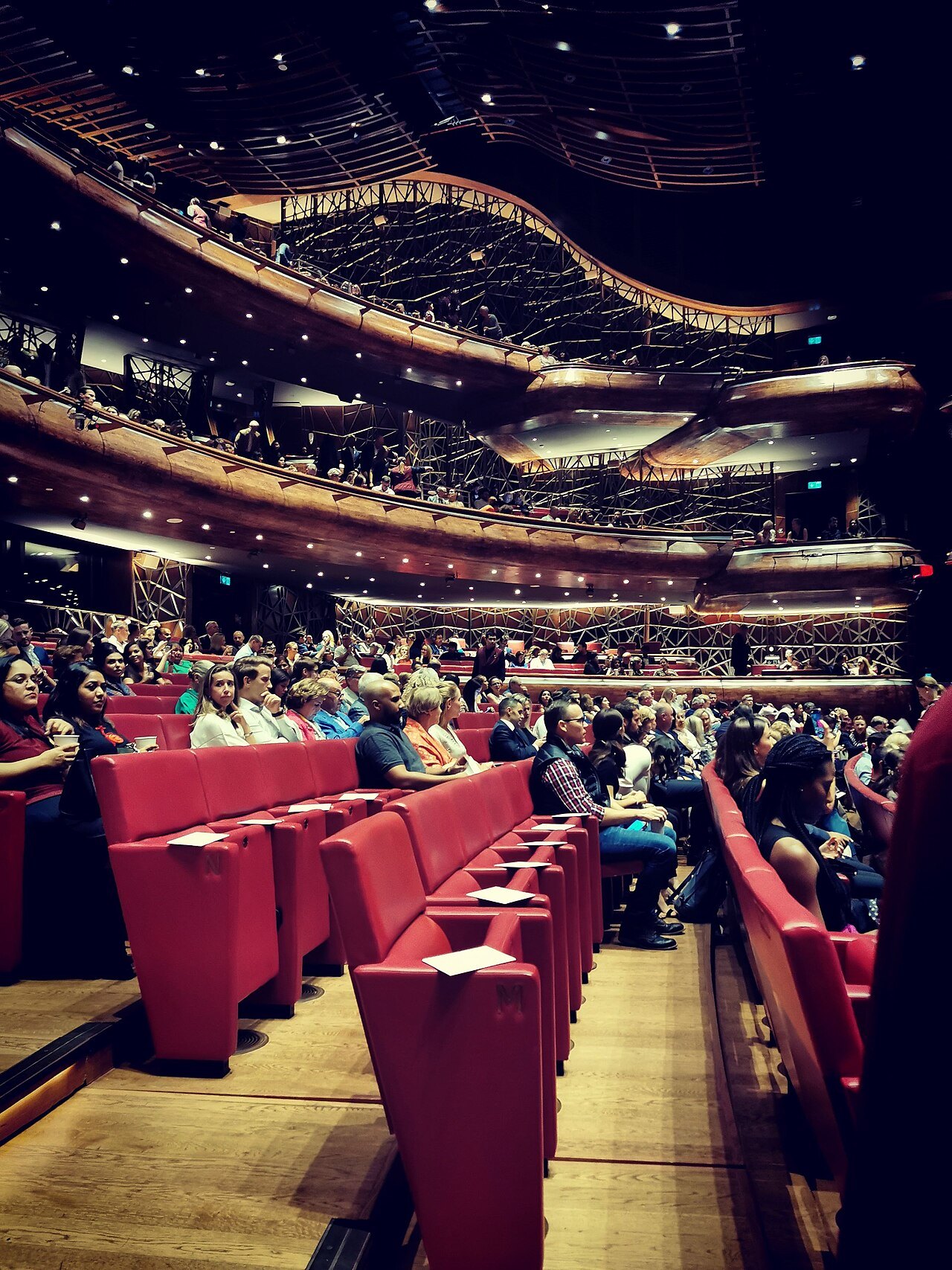
Dubai Opera opened on 31 August 2016. The venue added a different reason to spend an evening Downtown: performance rather than shopping or observation decks. Its dhow-inspired form connected an international cultural programme with an image drawn from the city’s maritime history. [14]
The change mattered for real estate because a neighbourhood’s appeal is built from repeated use. A singular tower may attract a photograph. A programme of performances, restaurants and public activity can encourage people to return. The most persuasive districts began to offer an account of daily life, not simply a dramatic silhouette.
This was not a complete transition from spectacle to substance. Landmark architecture remained central to marketing, and cultural infrastructure does not automatically create a walkable or affordable city. But the range of what developers and public institutions were trying to provide had broadened.
Why these examples belong together
Cayan makes the residential tower itself memorable. Dubai Opera makes the surrounding district more useful. The relationship between those two approaches would become increasingly important in Dubai’s next development cycle.
2021 Expo pulls the urban story south
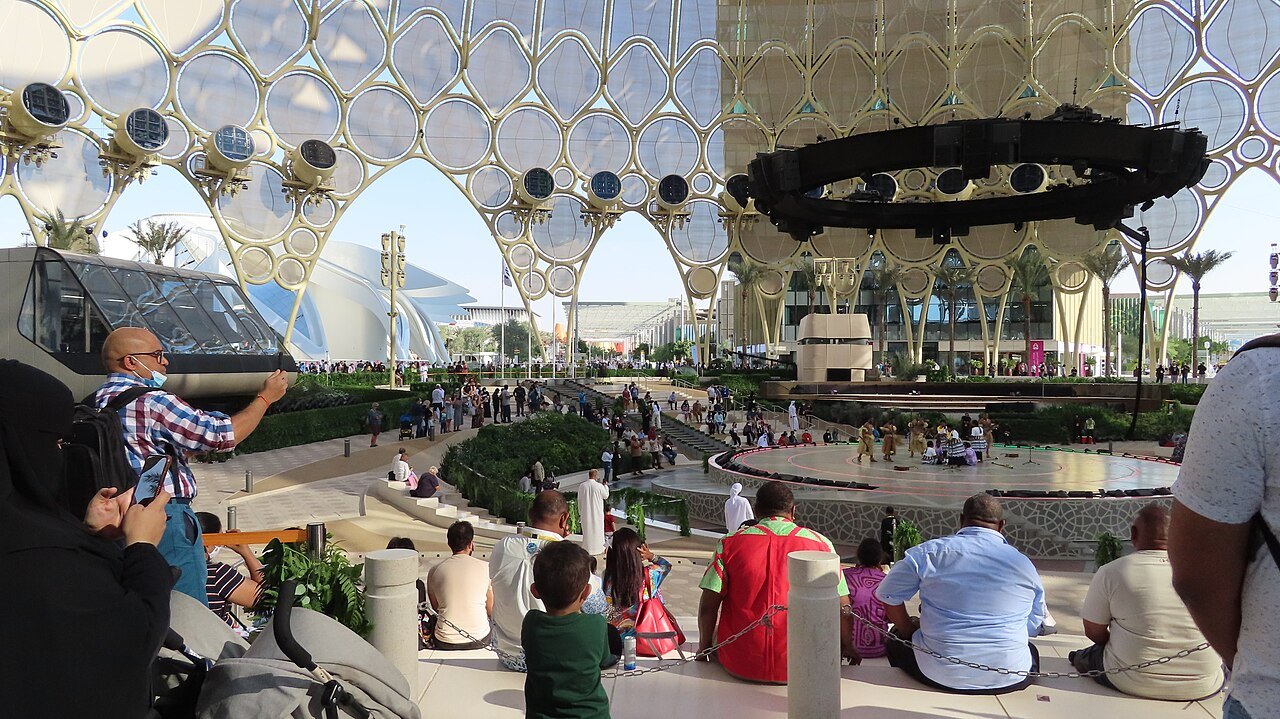
Dubai Frame opened in January 2018 in Zabeel. Its value as an image lay in an unusual proposition: the city itself became the exhibit. The structure invited visitors to compare older and newer Dubai within one view. [15]
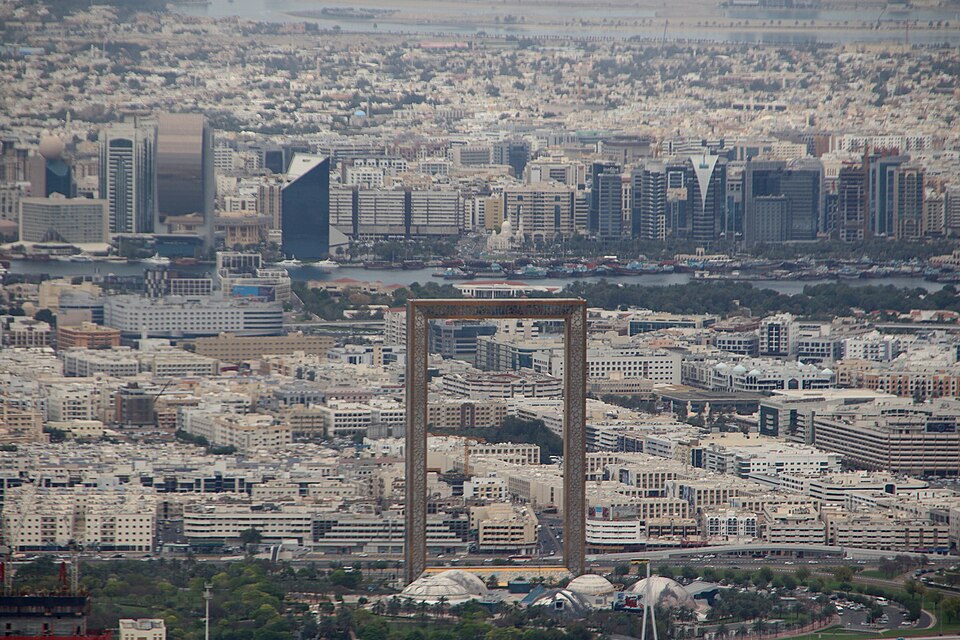
Further south, Al Wasl Plaza provided the architectural centrepiece for Expo 2020. The event retained its name but, after a pandemic postponement, opened on 1 October 2021. The distinction matters: photographs labelled “Expo 2020” do not establish that the public event took place in 2020. [16, 17]
Expo extended the city’s development narrative beyond the familiar central and coastal districts. Its legacy challenge was more demanding than staging a successful event: exhibition space and pavilions would need to become part of an enduring place to work, live and visit.
Dubai’s 2040 Urban Master Plan, launched in 2021, expressed that wider ambition through five main urban centres. Alongside established centres, it identified Expo and Dubai Silicon Oasis as major development focuses. The plan signalled a city seeking to organise its expansion around several centres rather than simply extending a continuous line of towers. These were planning objectives, not completed outcomes. [18]
The pandemic also made the limitations of fixed forecasts visible. Large developments require long lead times, while travel, occupancy and event demand can change abruptly. The ability to adapt an asset’s use became part of its long-term value.
2026 The landmark becomes a complete experience
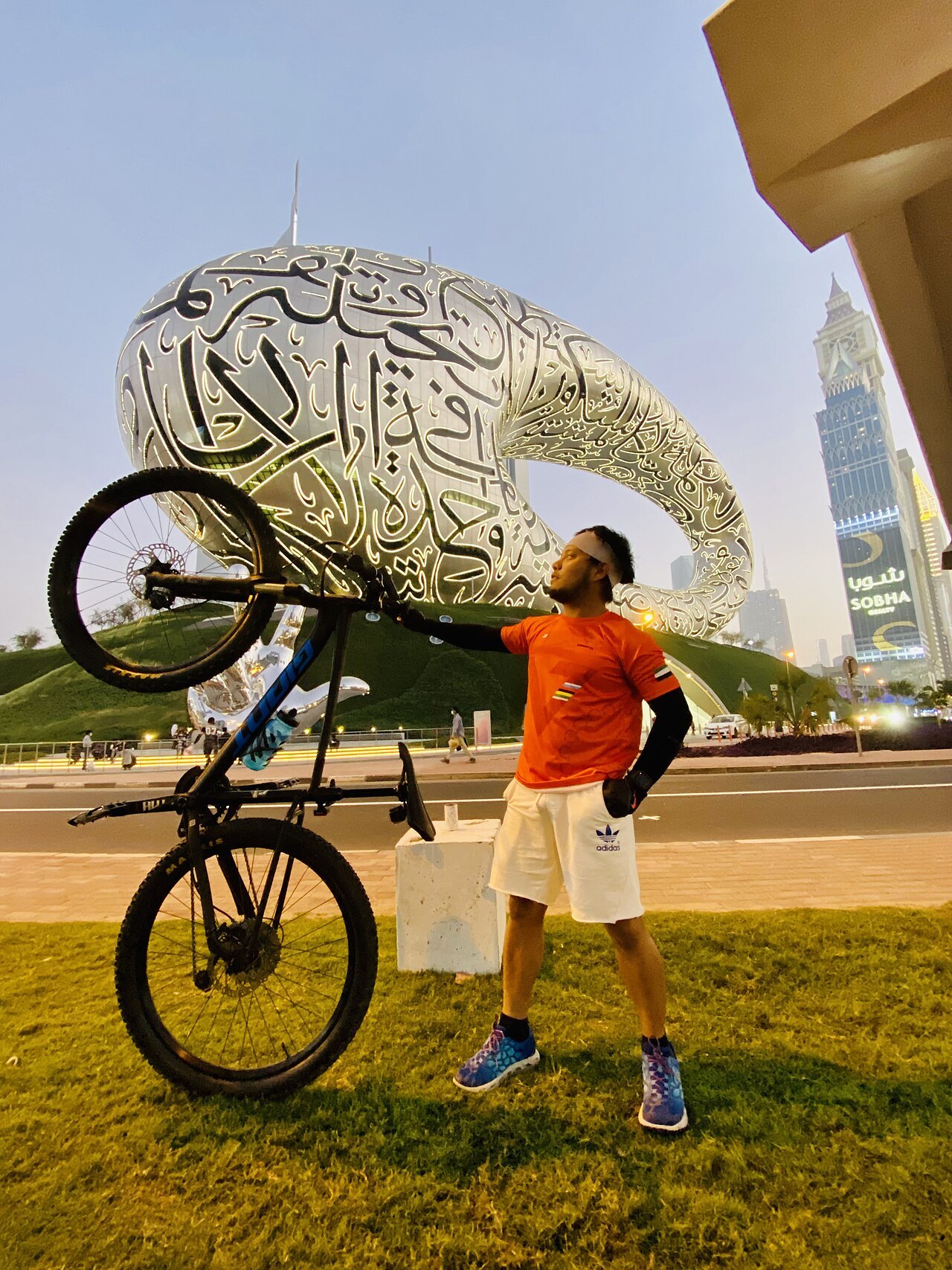
In the latest five-year interval, Dubai’s signature projects increasingly combine design with hospitality, culture and managed experiences. Museum of the Future opened on 22 February 2022. Its ring-like form and calligraphic exterior made an institution concerned with tomorrow immediately recognisable in the present. [19]
Atlantis The Royal debuted in 2023. One Za’abeel’s grand opening followed in 2024, adding its dramatic horizontal Link to the skyline. In November 2025, IHG announced the opening of Ciel Dubai Marina. These projects belong in the completed chapter, not a list of future Dubai attractions. [20, 21, 22]
The commercial logic is broader than the sale of floor area. A development can combine accommodation, residences, dining and a recognisable identity. Buyers are offered a managed lifestyle; operators gain several sources of revenue. Whether the premium is justified depends on service quality, running costs and durable demand, not on the brand name alone.
The city has also returned to questions of connection and permanence. The approved 2024 Expo City master plan sets out a continuing mixed-use future for the former event site. That is a reminder that the legacy of a flagship project is decided after its opening ceremony. [23]
No history should mistake delivery for immunity from shocks. The regional conflict has tested Dubai’s tourism and property markets in 2026; Reuters’ September reporting on Emaar describes recovery alongside weaker sales. The historical pattern remains relevant: the built city can keep expanding while market conditions become more difficult. [24]
The flagships that defined the period
Selected landmarks delivered or opened during 2001-2026. Dates refer to the milestone shown, not necessarily the start or finish of every construction package. Palm Jumeirah and the Metro are major infrastructure projects, so they are discussed in the article rather than classified here as buildings.
| Landmark | Milestone | What it changed |
|---|---|---|
| DIFC Gate Building | 2004 completion | Gave the financial district its symbolic address [3] |
| Mall of the Emirates | 2005 opening | Joined destination retail with indoor skiing [4] |
| Dubai Mall | 2008 opening | Anchored Downtown with retail and leisure [9] |
| Atlantis The Palm | 2008 opening | Established a major operating resort on the Palm [10] |
| Burj Khalifa | 2010 opening | Made Downtown an internationally recognised centre [8] |
| Cayan Tower | 2013 completion | Made sculptural residential design a Marina landmark [13] |
| Dubai Opera | 2016 opening | Added a performing arts anchor to Downtown [14] |
| Dubai Frame | 2018 opening | Turned the contrast between old and new Dubai into an attraction [15] |
| Al Wasl Plaza | 2021 Expo opening | Became the event and legacy district’s central gathering space [16, 17] |
| Museum of the Future | 2022 opening | Gave the future-focused institution a distinctive architectural identity [19] |
| Atlantis The Royal | 2023 debut | Advanced the large-scale luxury destination model [20] |
| One Za’abeel | 2024 grand opening | Combined mixed uses with a striking horizontal landmark [21] |
| Ciel Dubai Marina | 2025 opening | Added a major hotel landmark to the established Marina [22] |
What the next chapter needs to prove
The next measure of success should be the quality of the connections between these destinations: practical transport, comfortable public space, dependable services and housing suited to the people who work in the city. New landmarks can contribute, but they cannot deliver those outcomes on their own.
Five flagship projects to watch through 2031
The next five years run from 27 September 2026 to 27 September 2031. These are selected projects with published delivery targets inside that window, ranked here by their potential architectural and real-estate significance rather than expected investment return. Targets remain subject to change.
1 Burj Azizi on Sheikh Zayed Road
Planned height: 725 metres. The Council on Vertical Urbanism’s Skyscraper Center lists the tower as under construction with expected completion in 2030. Its significance is scale: a planned mixture of residential and hospitality uses at a height surpassed today by very few buildings. Treat any future world ranking as conditional on completion and competing projects. [25]
2 Six Senses Residences Dubai Marina
Current developer target: 2029. Select Group’s project page gives this date, superseding the 2028 timing still found in some older coverage. The project represents the attempt to combine very tall residential development with a hospitality-led service and wellness proposition in an established district. Its architectural prominence will be easier to judge than the long-term value of its service premium. [26]
3 Como Residences on Palm Jumeirah
Published handover target: Q2 2028. Nakheel’s September 2024 construction-contract announcement gives that schedule; its construction page records 18.37% progress from a June 2026 internal inspection. The tower’s importance lies in adding a highly visible vertical residential landmark to the Palm. The target and progress figure are dated disclosures, not a guarantee of delivery. [27, 28]
4 Baccarat Hotel and Residences in Downtown
Developer target: 2027. H&H’s project page lists a 2024 start and planned 2027 completion for the Libeskind-designed development. The two-tower hotel-and-residences scheme illustrates Dubai’s continued appetite for architecture linked to an established luxury identity. Its test will be how well the completed buildings work within an already competitive central district. [29]
5 DWTN Residences in Business Bay
Published schedules differ: Deyaar’s Q3 2025 investor presentation gives H2 2029, while current property listings report December 2030. Both sit inside this article’s horizon; neither should be presented as certain. Deyaar formally announced groundbreaking on 6 January 2026. The project is significant as a proposed residential landmark with shared amenities distributed vertically through the building. [30, 31, 32]
Together, these projects show where Dubai’s next architectural competition is heading: exceptional height, branded service and increasingly elaborate residential environments. Their lasting contribution will depend on whether the life inside them is as convincing as the image they add to the skyline.
Sources and photo credits
Research checked on 27 September 2026. The main article ends with the five-project watchlist. This reference appendix provides traceable sources for dates, plans and historical claims. Interpretations of economic and urban significance are the author’s analysis.
[1] Jumeirah, From Sand to Skyline; opening years for Burj Al Arab and Emirates Towers. Source
[2] US State Department, 2007 UAE Investment Climate Statement; 2002 ownership announcement. Source
[3] Multiplex, The Gate Building; completion in 2004. Source
[4] Majid Al Futtaim, Our Journey; 2005 retail and Ski Dubai milestones. Source
[5] Dubai Land Department, property legislation including Regulation No. 3 of 2006. Source
[6] USGS EROS, Palm Jumeirah; Landsat image chronology. Source
[7] Human Rights Watch, Building Towers Cheating Workers, November 2006. Source
[8] Emaar, Burj Khalifa; official opening and building context. Source
[9] Emaar, Dubai Mall marks a decade, October 2018; November 2008 opening. Source
[10] Atlantis, Ten fascinating facts about Atlantis The Palm; 2008 opening. Source
[11] Reuters, Dubai debt crisis overshadows UAE national day, 2 December 2009. Source
[12] RTA, Dubai Metro carries 2.4 billion riders over 15 years; historical timeline. Source
[13] SOM, Cayan Tower; completion and design. Source
[14] Dubai Opera, Our Story; opening on 31 August 2016. Source
[15] Dubai Municipality, Frame Dubai VIP package announcement; January 2018 opening. Source
[16] BIE, 169th General Assembly; Expo opened on 1 October 2021. Source
Sources continued
[17] Adrian Smith and Gordon Gill Architecture, Al Wasl Plaza. Source
[18] Dubai Media Office, launch of Dubai 2040 Urban Master Plan, 13 March 2021. Source
[19] Dubai Future Foundation, Museum of the Future opening and exhibits, February 2022. Source
[20] Atlantis, The Royal grand reveal, January 2023. Source
[21] One Zaabeel, grand opening celebrations, February 2024. Source
[22] IHG, Ciel Dubai Marina officially opens, 17 November 2025. Source
[23] Dubai Media Office, Expo City master plan, 3 October 2024. Source
[24] Reuters, Emaar hotel recovery and property sales, 21 September 2026. Source
[25] Council on Vertical Urbanism, Skyscraper Center, Burj Azizi. Source
[26] Select Group, Six Senses Residences Dubai Marina; current 2029 target. Source
[27] Nakheel, Como construction contract announcement, September 2024. Source
[28] Nakheel, Como construction progress; June 2026 inspection. Source
[29] H&H, Baccarat Hotel and Residences; project dates. Source
[30] Deyaar, Q3 2025 investor presentation; DWTN target on slide 20. Source
[31] Deyaar, DWTN groundbreaking announcement, 6 January 2026, filed with DFM. Source
[32] Property Finder, DWTN Residences; December 2030 delivery listing. Source
Photographs: Wikimedia Commons contributors, credited below each image. Photographs may have been taken after the year used to organize the historical narrative; they show the named landmark rather than its exact appearance in that year.